
In this article6 parts · 9 min read
Dolomites food is one of the very good reasons to go walking in the mountains of Alto Adige. You walk for a few hours, arrive at a small mountain hut, sit outside with the Dolomites all around you and enjoy a delicious plate of canederli, polenta or homemade cake.
I think this is a very nice way to spend a day in the Italian Alps! For this article I asked Rudy, one of our Walk About Italy guides, to tell me about the places where we stop during our Alps & Dolomites walking tour. Rudy is Tuscan, but he spends a couple of months every year in Alto Adige, walking these mountains and getting to know the people who live and work here. He told me about two mountain huts in particular, and about the food we enjoy along the way.
Dolomites Food: First, Let’s Understand What a Malga Is
A malga is not simply a mountain restaurant. Traditionally, it was the place where the malgaro, the mountain herdsman, took his cows during the summer months. He lived there, looked after the animals, made cheese and produced whatever he could with what was available.
Today many malghe welcome walkers and serve traditional food, but their mountain origins are still very important. Some are easy to reach, others require a good walk, and getting supplies to a hut above 2,000 metres is quite a different business from delivering food to a restaurant in the centre of Milan.
One of our favourite stops is the Langalm, on the walking route around the Tre Cime di Lavaredo.
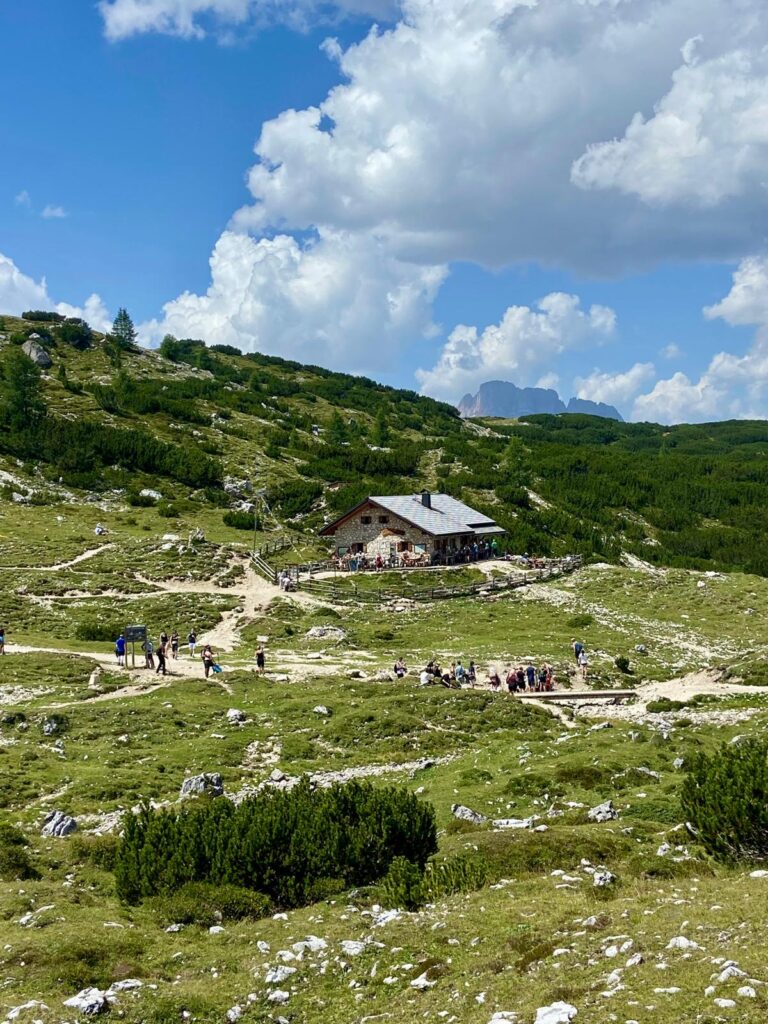
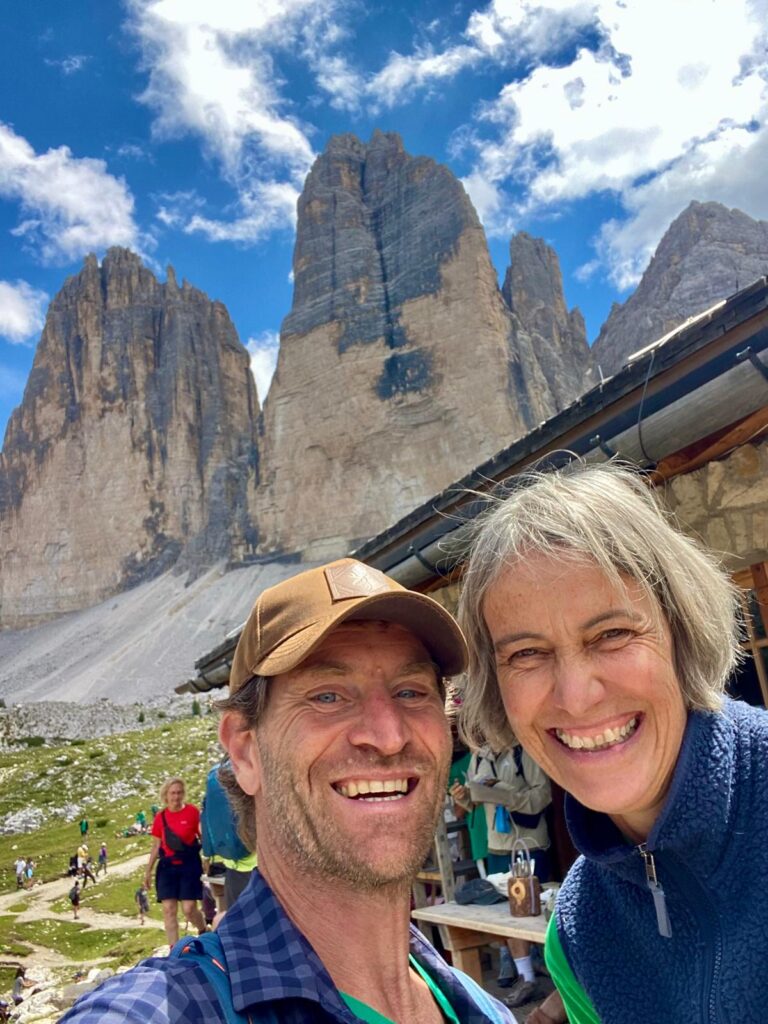
We sit with the famous three peaks in front of us and Monte Paterno nearby. The Tre Cime attract enormous numbers of visitors, but the Langalm is slightly away from the busiest huts, which makes it a very pleasant place for lunch.
The Langalm: Lunch with the Tre Cime
At the Langalm, Kati welcomes our groups. She has a warm, friendly way of receiving people, and even on a busy day you feel comfortable sitting there. Rudy has developed a particularly nice relationship with her over his many visits.
There is something worth knowing before ordering. The hut has no ordinary road access for deliveries, and much of its food and supplies arrives by helicopter, roughly once a month. On delivery days the hut closes, and the people working there have to plan carefully what they need and how much space they have to store it. So don’t expect an enormous menu, sparkling water or decaffeinated coffee. They concentrate on a smaller selection of dishes, prepared well, and the prices are comparable to, sometimes even lower than, those at more accessible places. I find this quite remarkable considering the work involved.
What to Eat in the Dolomites: Let’s Look at the Plates!
1. Canederli: Bread That Becomes Something Delicious
Canederli, or Knödel in German, are among the best-known dishes of South Tyrol.
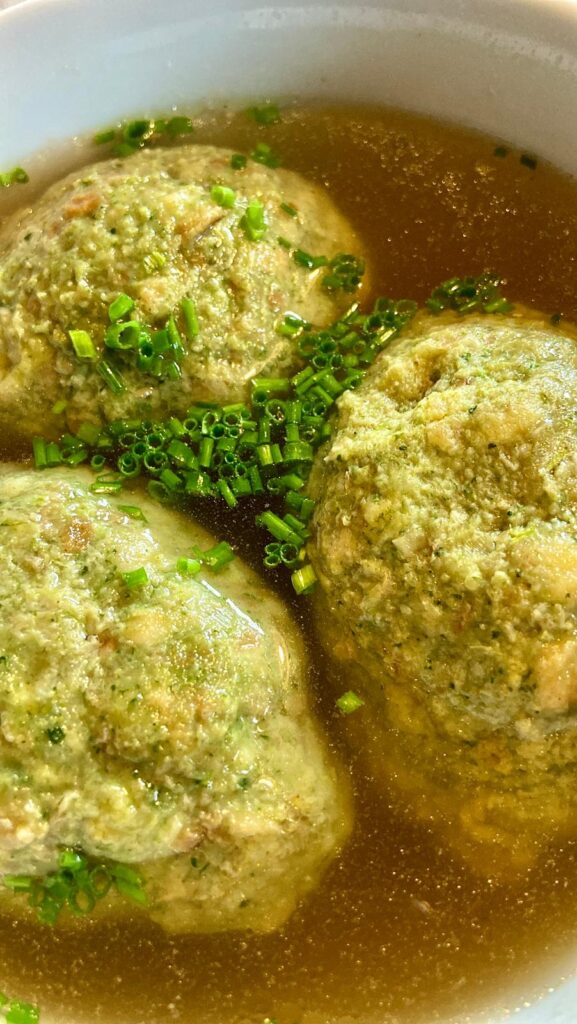
They are large dumplings traditionally made with stale bread, milk, eggs and other ingredients such as speck, cheese or herbs. This is a wonderful example of the old mountain cooking tradition, where wasting bread was not an option. You can eat canederli in a tasty broth, or served without broth, sometimes with melted butter. At the Langalm we find different versions, including pressed canederli, depending on what the kitchen is preparing.
2. Soups: Exactly What You Need After Walking
A bowl of hot soup is always a good idea in the mountains, even in summer.
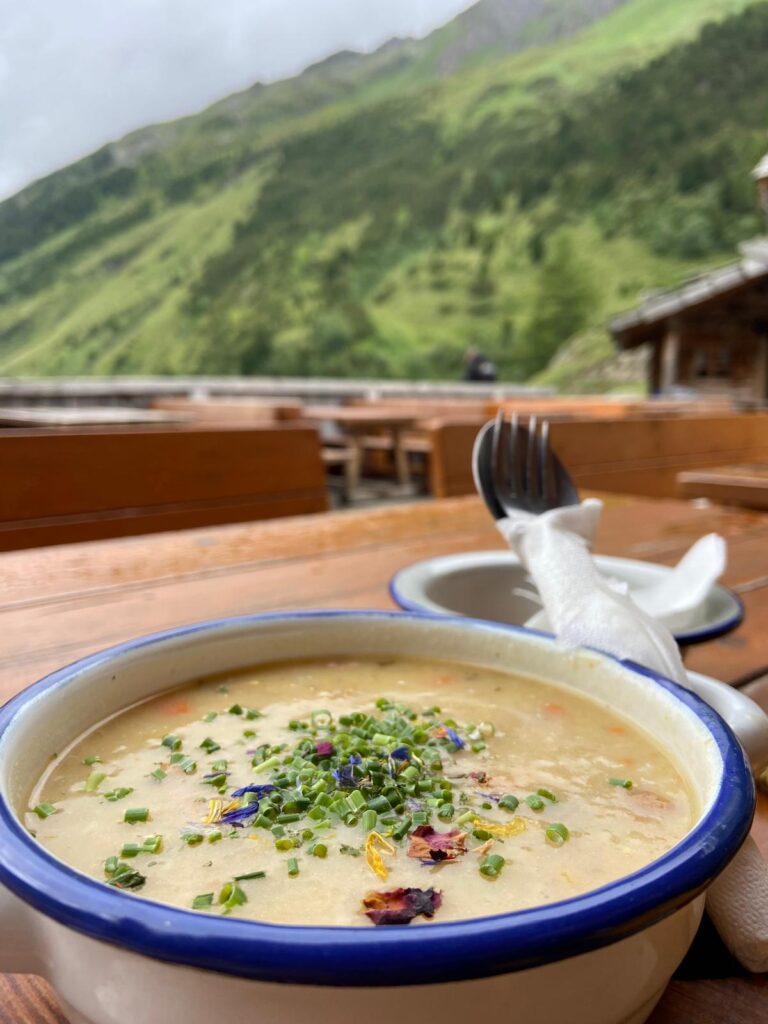
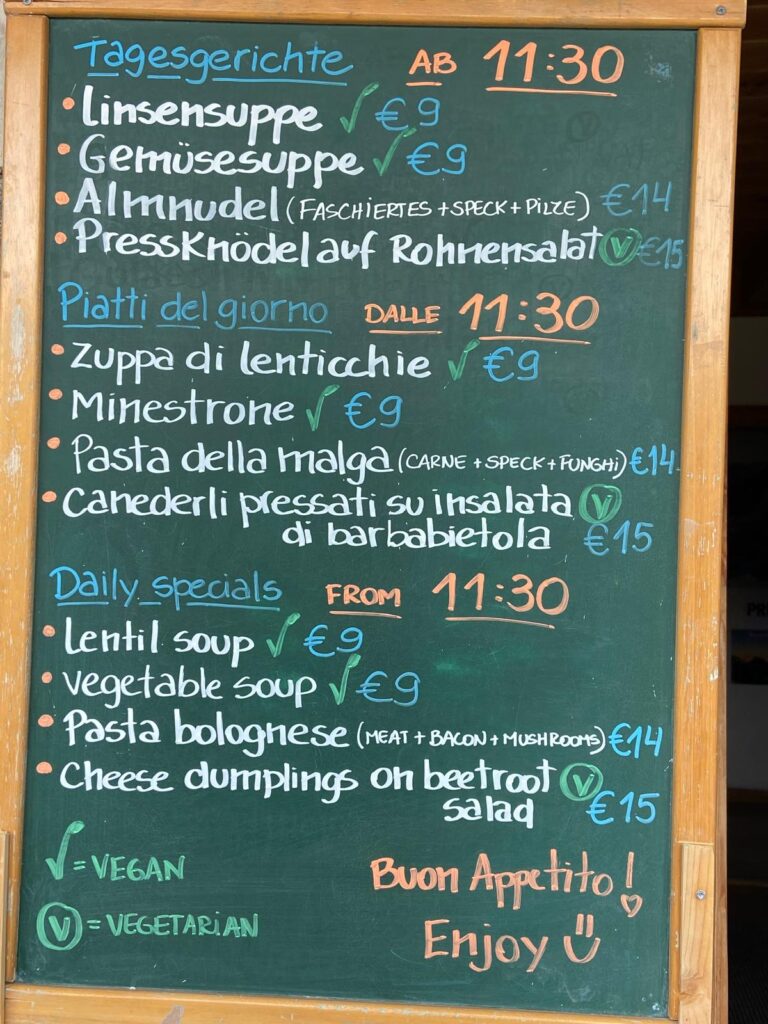
At the Langalm the menu often includes barley soup, lentil soup or vegetable minestrone, all very suitable for a lunch in the middle of a walking day. We usually look at the daily menu before choosing. The hut has its regular dishes, but the daily specials are often more interesting, and there is no reason to insist on eating something that is not available that day.
3. Polenta, Cheese and Other Mountain Specialities
Polenta is another traditional food that you will find in the Italian Alps.
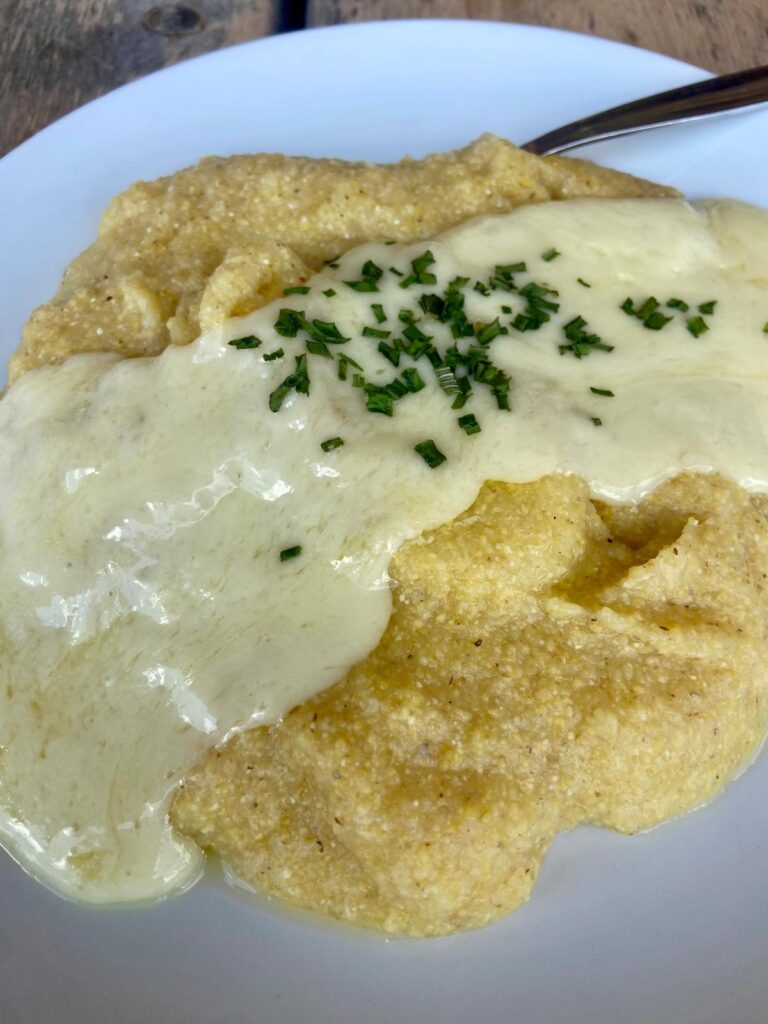
Made from cornmeal, it is simple, filling and very good with cheese. The combination of hot polenta and melted cheese is particularly welcome after a morning on the trails. Cheese and cured meats are also important parts of Alto Adige food. They belong to the history of the malghe, where milk was processed into products that could be kept and used over time.
4. Pasta in the Mountains? Of Course!
We are still in Italy, after all! At the Langalm you may find a simple pasta with tomato sauce, but also a more substantial mountain-style pasta with speck, meat and mushrooms. This is something I like about food in the Dolomites.
You recognise the Italian dishes, but you also find the ingredients and cooking traditions of the Tyrolean mountains. German and Italian names often appear together on the menu, and the food tells you quite a lot about this part of Italy.
5. Homemade Cakes: Save a Little Space
The Langalm makes its own cakes, and this is one of the things Rudy particularly appreciates about the place.
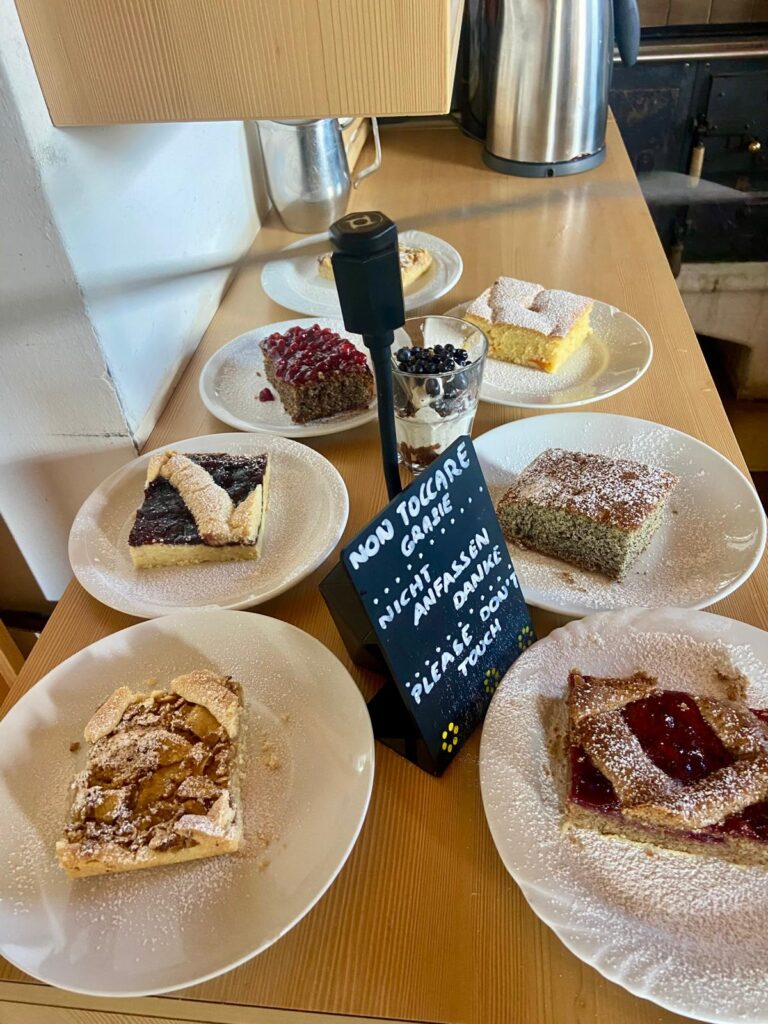
There is a lovely selection, including buckwheat cake, a traditional speciality of the area. Making cakes at the hut is also a practical choice. It is much easier to bring flour and other basic ingredients up the mountain than to transport and store a large number of finished cakes. The result is simple, homemade food, and very good food too!
What Do We Drink with Lunch?
Our lunch at the Tre Cime comes in the middle of one of the longer walking days, so we usually keep things quite moderate. Some guests have a beer, others prefer water, and a particularly nice option is water with elderflower syrup. Rudy often orders the elderflower drink himself, and our guests sometimes follow his example. It is refreshing, and quite suitable when you still have some walking ahead of you.
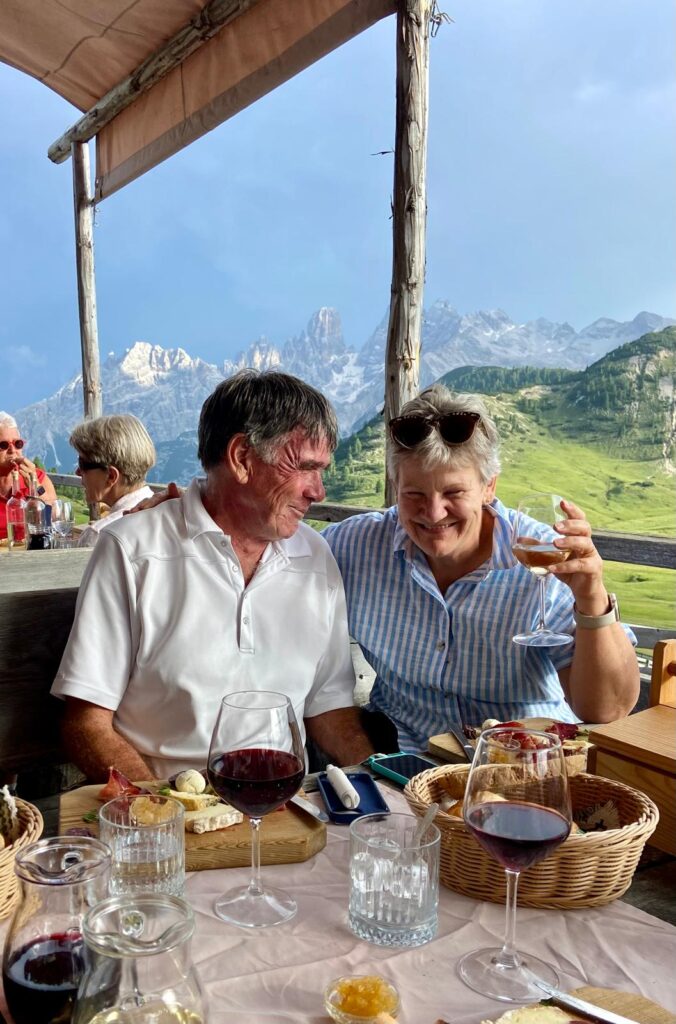
There is no hurry to turn lunch into a long drinking session. We have the mountains to enjoy, a good meal in front of us and the rest of the trail waiting.
A Different Experience: Dinner at Malga Prato Piazza
Now I want to take you to another place, because our food experiences in the Dolomites are not limited to lunch. At Prato Piazza, we have a particularly lovely dinner in the mountains, and the atmosphere is completely different. Prato Piazza is a beautiful green plateau with views towards Monte Cristallo.
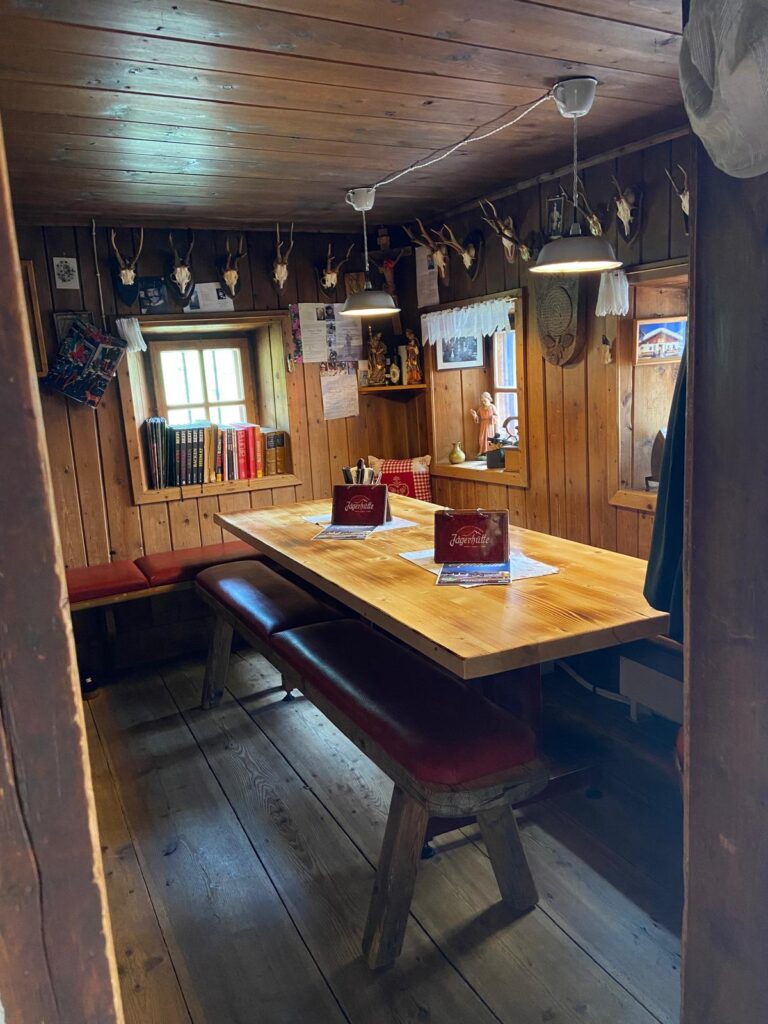
During the day it can be crowded, but we arrive later in the afternoon, when many visitors are leaving. We usually take a walk before dinner, then reach the malga at around 6:30 or 7 pm. Alex, who runs the place, opens especially for our group. This means we have the hut to ourselves, with the mountains around us and, when the weather cooperates, the evening light slowly changing over the plateau.
A Board of Cold Cuts and Cheese
Dinner begins with a board of cured meats and cheeses, prepared at the malga. These are products of the mountain food tradition, and a very nice way to begin the meal together. Unlike lunch at the Langalm, where we can choose from the menu, dinner at Prato Piazza is arranged for our group, with a fixed menu. We sit together and enjoy what has been prepared for us.
Kaiserschmarrn: The Dessert You Must Try
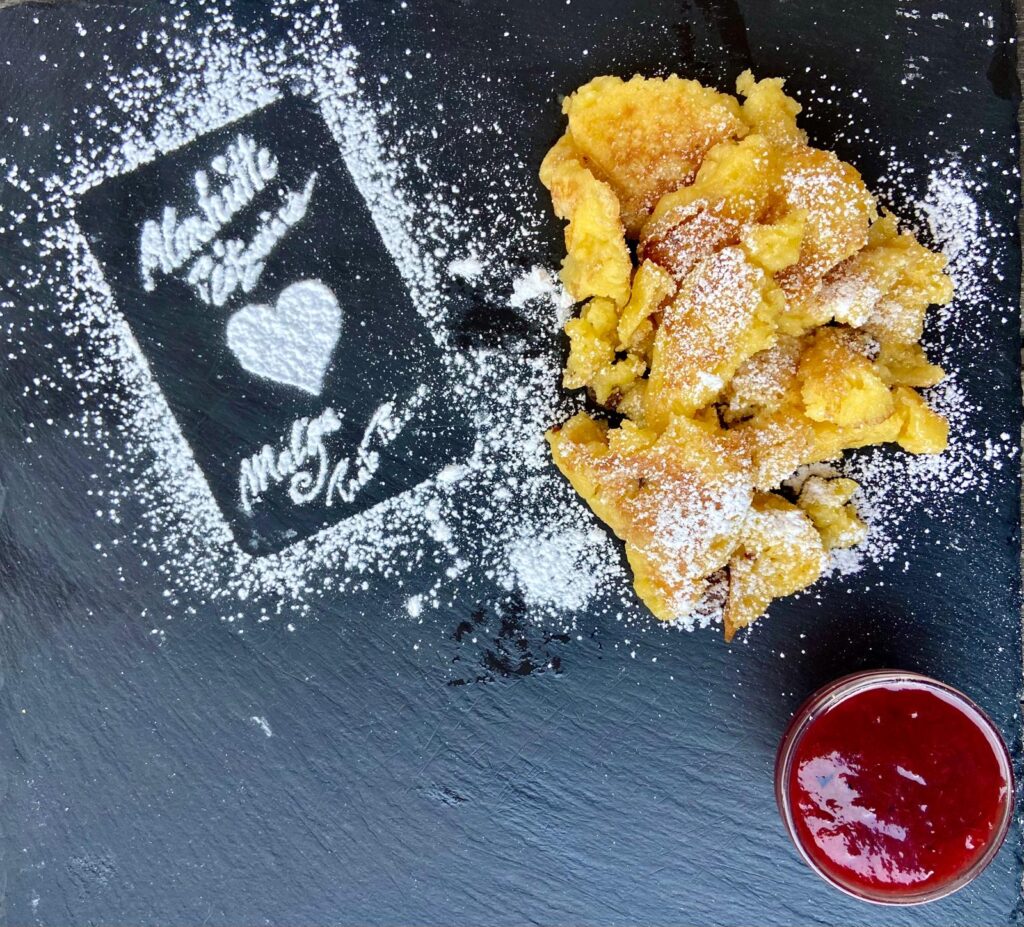
Now we come to a dessert with a rather difficult name: Kaiserschmarrn! It is a sweet, thick pancake made with eggs, broken into pieces during cooking and traditionally served with sugar and fruit jam. It belongs to the Austrian and South Tyrolean cooking tradition, and it is one of those dishes that look rather simple until you taste them.
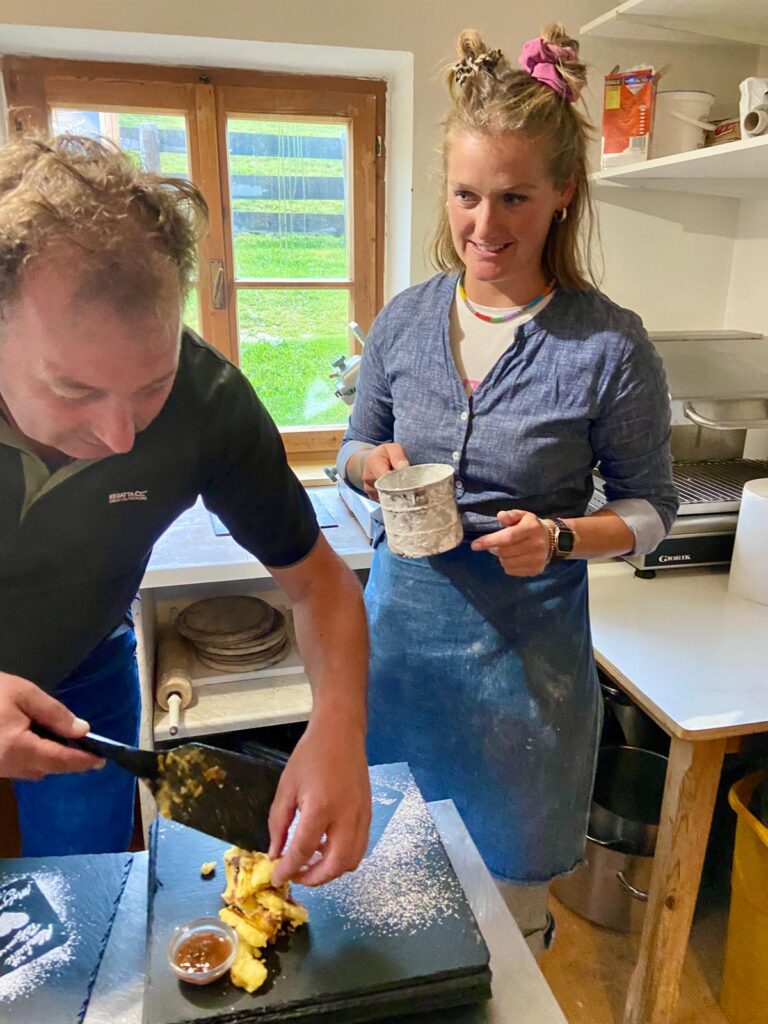
At Malga Prato Piazza, Alex prepares it in the kitchen and it arrives at the table freshly made and still warm. We have photographed him making it, because seeing how a traditional dish is prepared is always more interesting than simply reading its name on a menu.
The Kaiserschmarrn is served with berry jam. It is a generous dessert, quite different from the small slice of cake you might expect at the end of dinner, and I think it deserves its reputation!
An Accordion, a Toast and the Evening Mountains
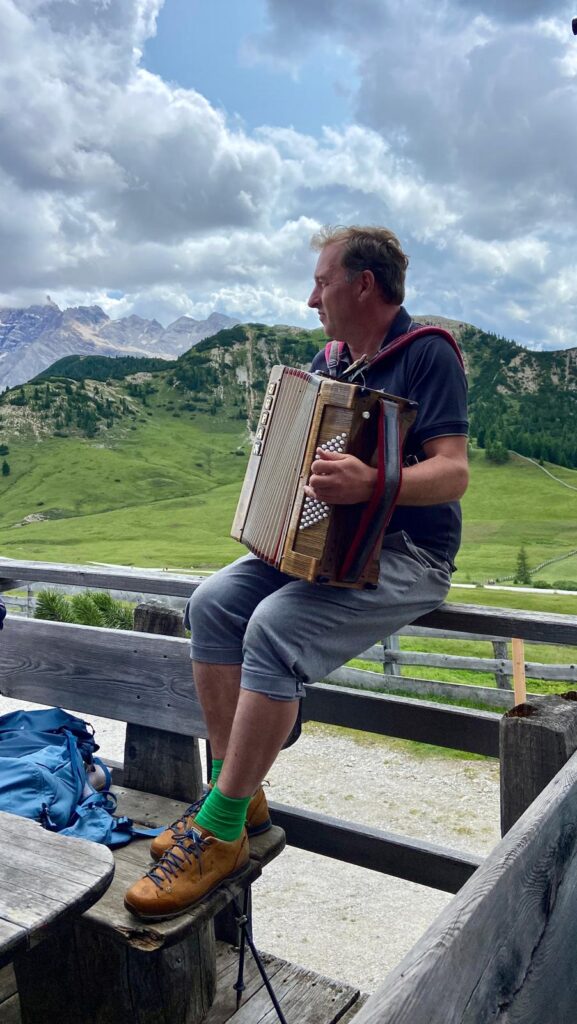
There is another reason why dinner at Prato Piazza stays in our guests’ memories. Alex sometimes takes out his accordion and plays traditional South Tyrolean music for about ten minutes. Think of the situation: you have finished walking, you are sitting in a mountain hut with your travelling companions, there are very few people left on the plateau and the mountains are all around you. Then Alex starts playing his accordion. Very nice indeed!
Rudy remembers one particular evening when a tremendous storm interrupted the afternoon walk. The group arrived earlier than expected and began having drinks at around five. Then the sky cleared, and a rainbow appeared beside Monte Cristallo. That is the mountain weather for you. You cannot arrange these things, and sometimes an afternoon that looks rather disappointing turns into a beautiful evening.
Prost! The Final Toast
At the end of dinner we often raise a glass together. The traditional word here is “Prost”, the informal German way of saying cheers. You may also hear “Prosit”, but Prost is what we usually say around the table. By this time Alex may already have played his accordion, the air outside is getting cooler and, if our timing is good, the mountains begin to take on the orange colours of the evening light.
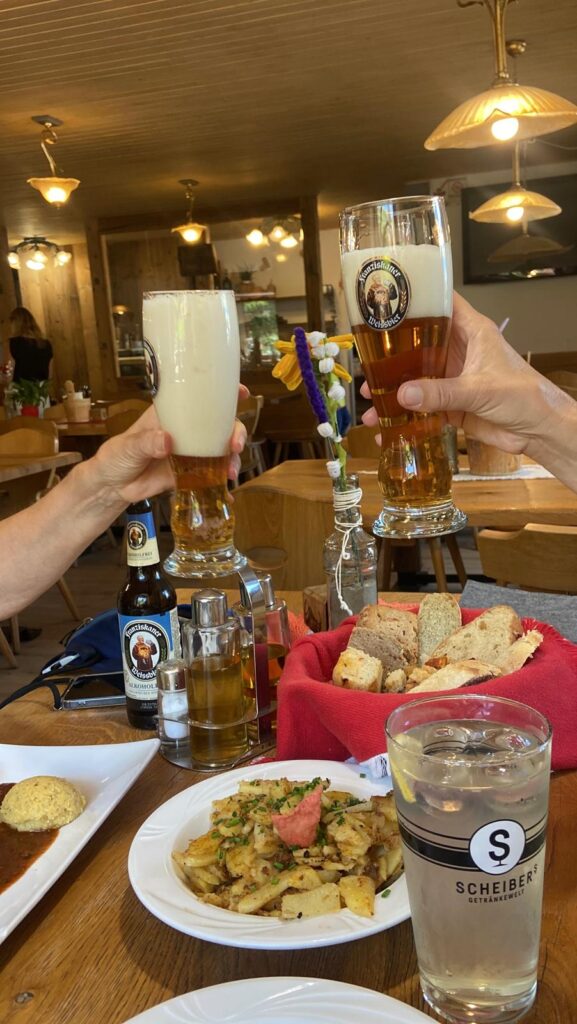
And what about grappa? You will certainly come across mountain spirits in this part of Italy, including grappa al cirmolo, made with the aromatic Swiss stone pine. But the drink served for our final toast is not always the same, so I would rather leave that little detail to the evening itself.
More Food Along Our Alps & Dolomites Walking Tour
The Langalm and Prato Piazza are two places that tell you a lot about our walks, but they are not the only stops where we enjoy good food. We also visit other mountain huts, refuges and restaurants, each with its own menu and setting. In the Valle Aurina, for example, we have lunch at the Trinksteinalm. Other dishes you may come across during our travels include spinach-filled ravioli with melted butter, spinach canederli, fried cheese served with salad and jam, and Marillenknödel, sweet apricot dumplings served with vanilla sauce.
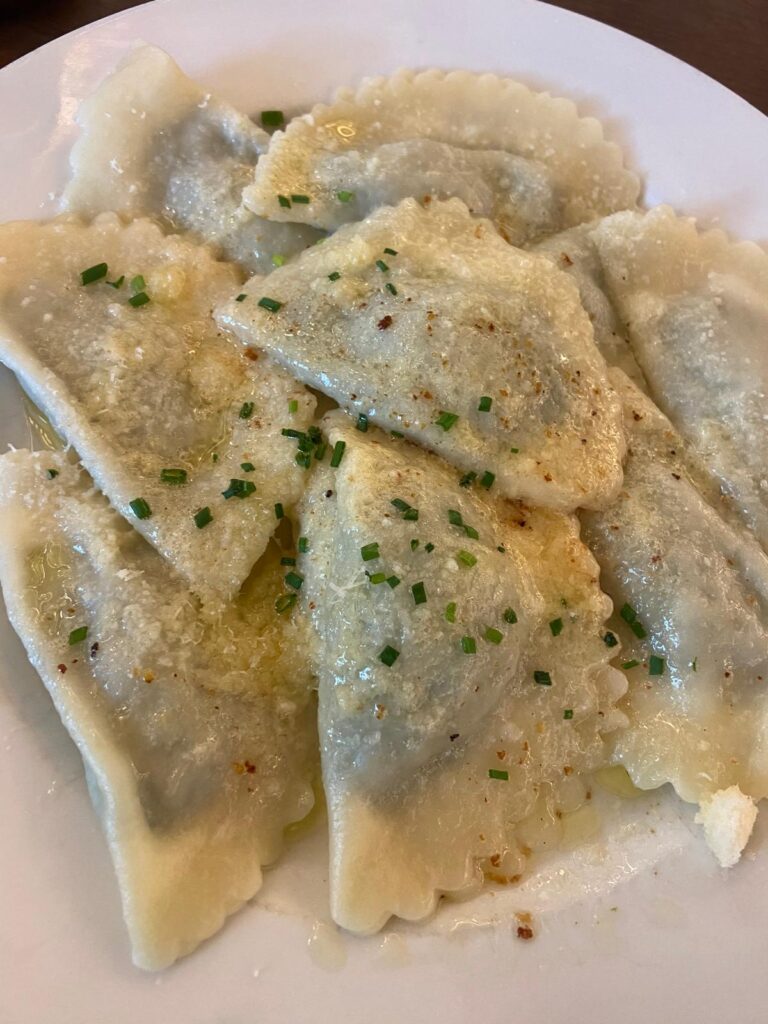
I could go on describing dishes, but I would rather invite you to come and try them. We walk through some of the most beautiful mountains in Italy, stop in places where people know how to prepare good local food, and enjoy our meals without rushing.
You can find the walking itinerary and all the details on our Alps & Dolomites tour page. And if you enjoy discovering Italy through the people who produce its food, you might also like our article about the farmers, artisans and makers we meet along our tours.
BUON APPETITO!
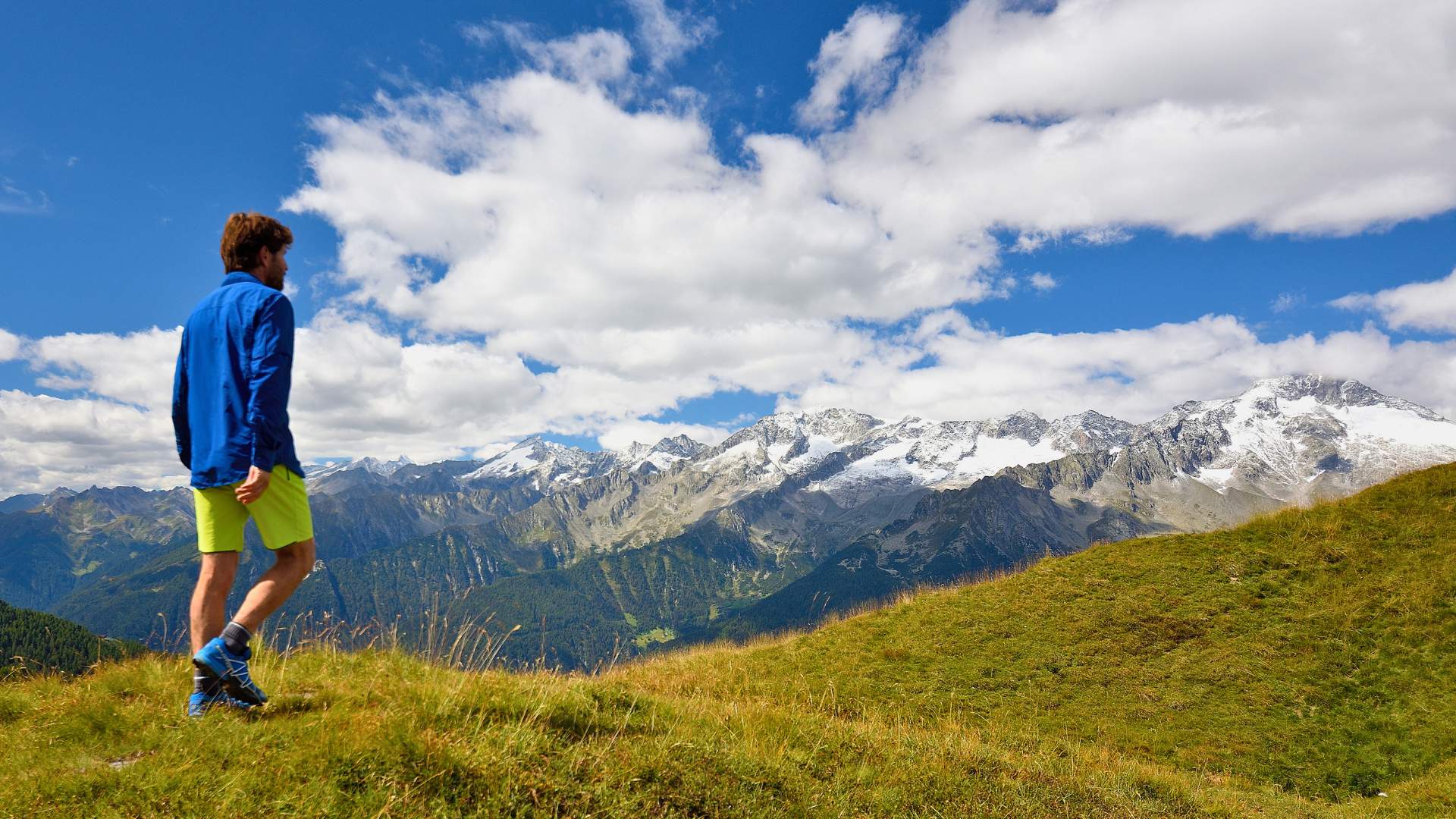
Alps & Dolomites
Seven days walking the Dolomites at a gentle pace: vineyards, an abbey, a copper mine and the Tre Cime di Lavaredo. Small groups, local guides.
See the tourQuestions people ask
What is traditional food in the Dolomites?
Traditional Dolomites food includes canederli, barley and lentil soups, polenta, local cheeses, cured meats, homemade cakes and Kaiserschmarrn.
What is a malga in South Tyrol?
A malga is traditionally a mountain pasture hut where herdsmen spent the summer with their cows and made cheese. Today many malghe also serve food to walkers.
Can you eat at a mountain hut during a Dolomites walking tour?
Yes. On our Alps & Dolomites walking tour we stop at mountain huts including the Langalm near the Tre Cime di Lavaredo, where we enjoy traditional dishes during our walk.
What is Kaiserschmarrn?
Kaiserschmarrn is a traditional sweet pancake broken into pieces during cooking, usually served with sugar and fruit jam. At Malga Prato Piazza, Alex prepares it fresh for our group.
What do people drink with food in the Dolomites?
At lunch our guests often choose water, beer or water with elderflower syrup. The evening toast at Prato Piazza is traditionally accompanied by the word "Prost".
A certified nature walking guide since 1999, Gianni spent years guiding and working behind the scenes for foreign walking tour companies. Then he earned his Tour Organizer license and now runs Walk About Italy. Music and walking are his passions.
Nature guide on our walks in Alps & Dolomites, Amalfi Coast, Cinque Terre, Iconic Tuscany and Italian Lakes.