There are places in Italy that I remember for their beauty. But, after many years of guiding, I have realised that the memories that stay with me longest are very often connected to people.
The local experiences in Italy are the difference: a lunch prepared in a farmhouse kitchen. Someone showing us how a chair is made by hand. A chef who has changed her life completely. A family explaining what happens to an alpine plant between the moment it is harvested and the moment its essential oil runs from the still. Or discovering how silk helped shape the history of an entire city.
These encounters were never added to our tours simply to fill an itinerary. They are there because they help us understand the places we are walking through. And, over the years, many of the farmers, cooks, artisans and small producers we visit have become friends as well as partners.
Table of Contents
- Tuscany — Maura and Virno at Santa Maria
- Amalfi Coast — Raffaella at Il Tintore
- Sicily — Chef Ciccio in Lipari
- Umbria & Undiscovered Tuscany — Francesco and Gabriele at Cantina della Luce
- Cinque Terre — Paolo and Gabriele Levaggi and the Chiavari chair
- Alps & Dolomites — the people behind Bergila
- Italian Lakes — discovering Como’s silk tradition
- Puglia — ancient olive trees and Antica Masseria Brancati
- Why these encounters matter
Tuscany — Maura and Virno at Santa Maria
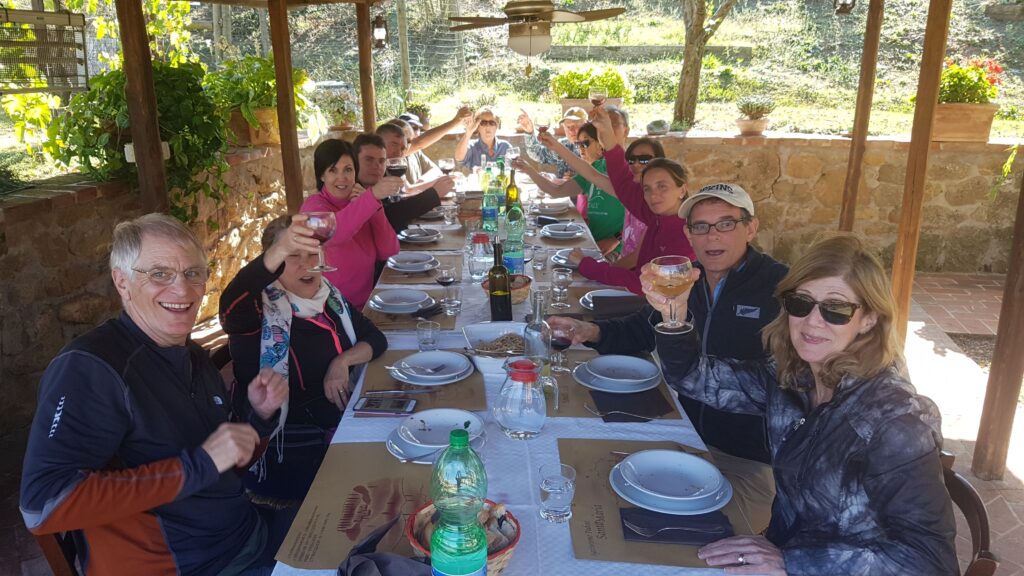
I have known Maura and Virno at Agriturismo Santa Maria for many years, and visiting their farm near Pienza never feels quite like visiting a tourism business. It feels much more like arriving at someone’s home — because that is essentially what it is.
Virno works the land, growing wheat, chickpeas, vegetables and saffron. Maura is in charge of the kitchen, but the farm is very much a family affair: their children are involved too, and the grandmother still makes pici by hand. Depending on the season, our guests may find saffron flowering in the fields, vegetables coming in from the garden or something slowly cooking before we arrive.
Then we sit down.
That part is important. In our Iconic Tuscany Tour we are not simply buying a tasting or stopping for a quick demonstration. We stay for lunch, talk, ask questions and eat what the family produces and cooks. For Maura and Virno, agriculture remains the heart of the farm, but welcoming small groups provides another source of income that makes sense precisely because it grows naturally from what they already do.
You don’t just taste Tuscany here. For a few hours, you enter somebody’s version of everyday Tuscany.
Amalfi Coast — Raffaella at Il Tintore
Raffaella did not spend her whole life dreaming of becoming a restaurant chef. In fact, she spent around twenty years doing a completely different and much more stressful job before deciding that she wanted another kind of life.
That other life became Il Tintore, in the green hills of Tramonti above the Amalfi Coast.
When we visit, much of what reaches the table comes from the land around us. It is an intimate contrast to the more famous side of the Amalfi Coast: no glamorous terrace hanging over the sea, but vineyards, vegetable gardens, family cooking and the feeling that someone has genuinely invited you into her world.
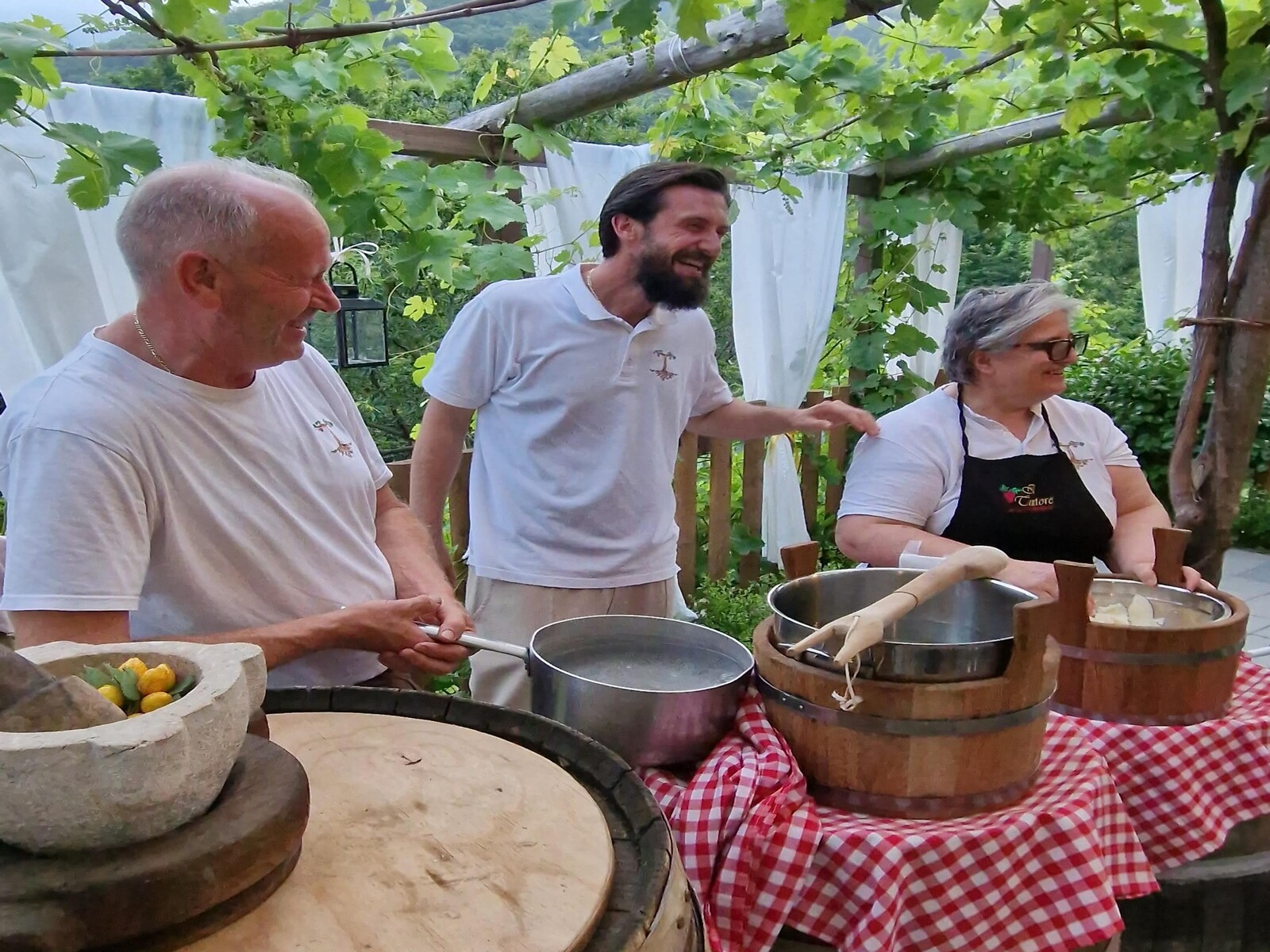
During our Wonders of Amalfi Coast tour one of the highlights is making mozzarella. Fresh curd becomes something completely different in front of our eyes — and, naturally, we taste it. The experience remains a real part of the day rather than a staged stop: walking, food and the people of the valley all belong to the same story.
Raffaella made a brave decision to build a different life for herself. Every time one of our groups sits around her table, we become a small part of that story.
Sicily — Chef Ciccio in Lipari
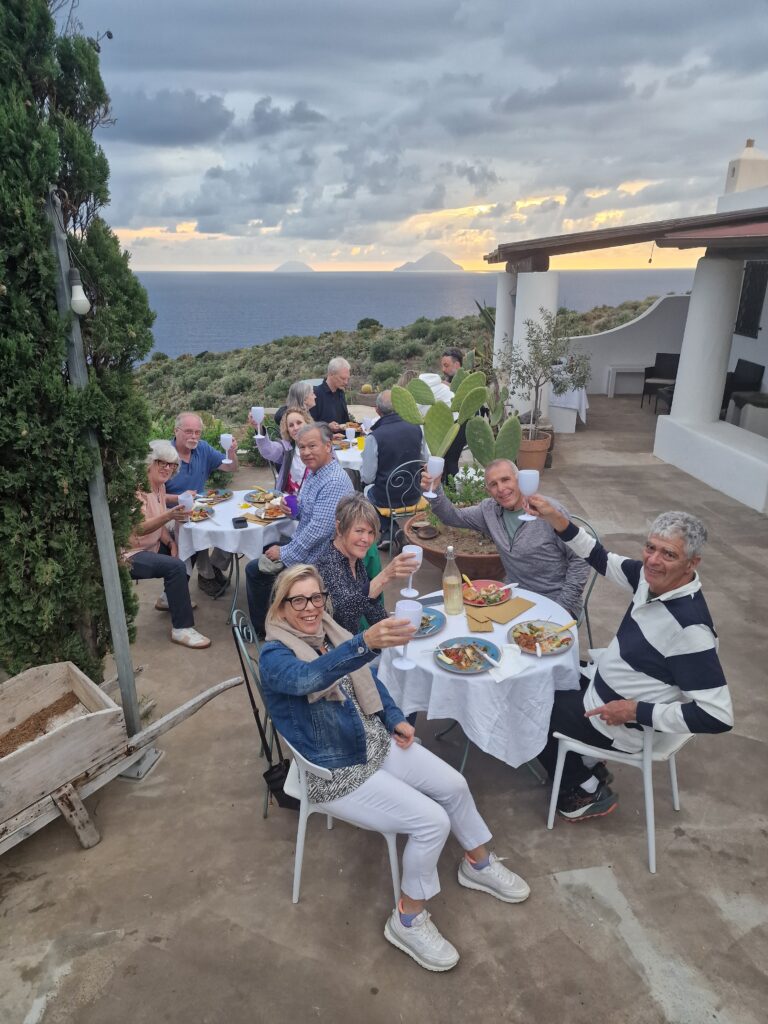
In Lipari, Chef Ciccio welcomes us in a place with a much more personal history: his grandfather’s house.
The setting is extraordinary, overlooking the sea, but what interested me from the beginning was not simply the view. Ciccio wanted to bring a family place back to life. Rather than leaving the old house as a memory of another generation, he began turning it into somewhere where people could gather again.
Food is what makes that possible.
During our The Secret Side of Sicily tour, when our guests eat there, the experience is therefore about considerably more than finding a restaurant with a beautiful terrace. Ciccio cooks, tells stories and shares something connected to his own family history. The money our groups spend there contributes, in its small way, to the continuing restoration and use of the property.
A house survives differently when people keep sitting around its table.
Umbria & Undiscovered Tuscany — Francesco and Gabriele at Cantina della Luce
One of the encounters I particularly like on our Umbria & Undiscovered Tuscany walking tour takes place in Sorano, where two young friends, Francesco and Gabriele, have chosen to build their future around something that belonged to the past.
They are the two young winemakers behind Cantina della Luce. Francesco brought an extraordinary family inheritance to the project: an old cellar in the historic centre of Sorano, dug entirely into the volcanic tuff almost a century ago by his great-grandfather and later used by his grandfather. Gabriele brought vineyards from his own family. Together, they reopened the abandoned cellar and began making wine there again.
What I love about their story is that they did not set out to create a polished wine-tourism attraction. They studied agriculture, became friends, shared a passion for wine and eventually decided to do almost everything themselves, from caring for the vines to making and selling the finished bottles. Their approach is artisanal and deeply connected to the land, using natural and sustainable methods and intervening as little as possible between vineyard and cellar.
But perhaps the most interesting part of their work is what is happening outside the cellar. Francesco and Gabriele have begun recovering old vineyards around Sorano and Sovana that might otherwise have been abandoned or uprooted. Some of these vines are many decades old, preserving not only grapes but a small piece of the agricultural history of this corner of southern Tuscany.
Stepping inside the cellar makes the story even more tangible. It is not a building constructed to look ancient: it is a real family cellar carved into the tuff beneath Sorano, cool and dark, where wine and food were stored long before Francesco and Gabriele decided to give it a new life.
When we visit during our Umbria & Undiscovered Tuscany tour, the wine tasting is almost secondary to meeting them. We hear how the project began, see where their wines are made and understand why two people in their twenties decided that old vines and an abandoned underground cellar were worth investing their lives in.
For me, that is exactly the kind of experience this journey is about. Sorano is already extraordinary because of its tuff cliffs, medieval streets and Etruscan landscape. Meeting Francesco and Gabriele adds something a monument cannot give you: the feeling that the history of a place is still being written by the people who choose to stay there.Cinque Terre — Paolo and Gabriele Levaggi and the Chiavari chair
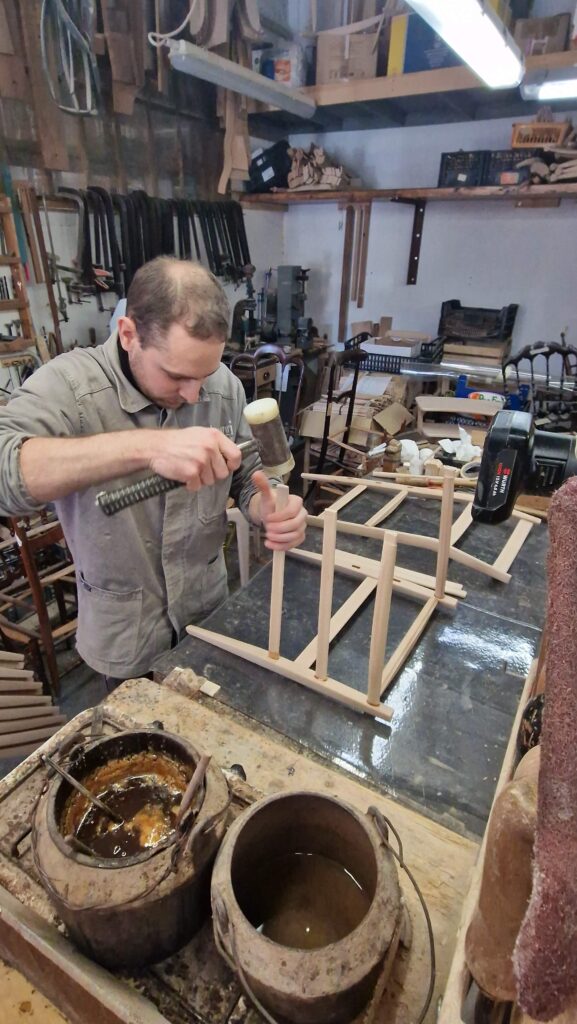
Not every tradition we encounter involves food.
During our tour in Cinque Terre and Portofino off-the-beaten-paths, in Chiavari we visit Paolo and Gabriele Levaggi, descendants of a family of woodworkers who have been working with wood for more than three generations. Their company has been producing authentic Chiavari chairs since 1963, using traditional materials and techniques while continuing to experiment with design. Their chairs are elegant, remarkably strong and, when you lift one, surprisingly light.
The Chiavari chair itself has a much longer history. It was created in the town in 1807, and Paolo and Gabriele continue a craft whose apparent simplicity hides extraordinary technical knowledge. Their chairs are still made largely by hand, from the preparation of the wood to the delicate joints that allow strength and lightness to coexist.
Watching them work changes the way you look at an everyday object.
This is also a craft facing a challenge common throughout Italy. Traditional skills survive only if there continue to be people willing to learn them, customers who appreciate them and opportunities to tell their story beyond the walls of the workshop.
Our visit is only a small part of that. But introducing travellers from around the world to Paolo and Gabriele and to what they create helps turn an object into a story — and a story into something worth remembering.
Alps & Dolomites — the people behind Bergila
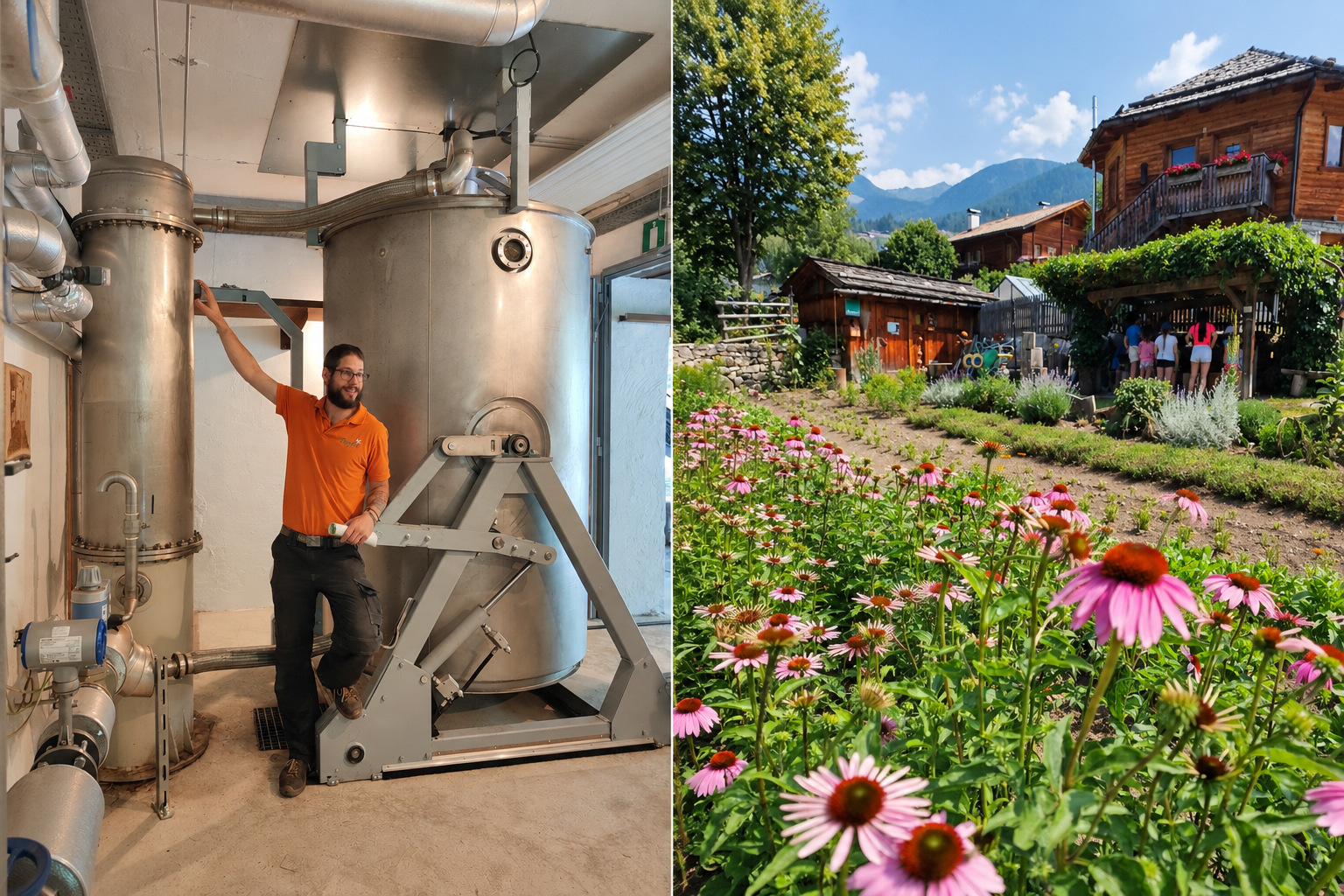 Bergila is one of my favourite examples of what I mean when I talk about meeting the people behind a place.
The Niederkofler family has been producing essential oils and herbal products in South Tyrol since 1912. More than a century later, Franz, Brigitte, Andrea and Verena continue the family story as Bergila carries its knowledge and traditions into the fourth generation. Their philosophy remains strikingly simple: quality rather than quantity.
And then there is Florian, one of the Bergila team members our guests meet during the visit. People like Florian are important to these experiences because they transform what could simply be a visit to a producer into a conversation. He helps us understand what is growing around us, how the plants are handled and what happens inside the distillery.
On our Alps & Dolomites tour, we discover how alpine plants become essential oils. Plants are harvested according to their natural cycle, much of the work is still carried out by hand, and the oils are extracted through steam distillation. Suddenly, something normally hidden inside a small bottle becomes tangible: plants, water, heat, knowledge and a surprising amount of patience.
There is another detail of Bergila’s philosophy that I particularly like. The company tries to work in harmony with natural cycles, sourcing plants from uncontaminated areas or its own certified organic cultivation and making careful use of the raw materials that enter the distillery.
Bergila does not feel like a company trying to recreate an old Alpine tradition for visitors. The tradition simply never stopped.
Italian Lakes — discovering Como’s silk tradition
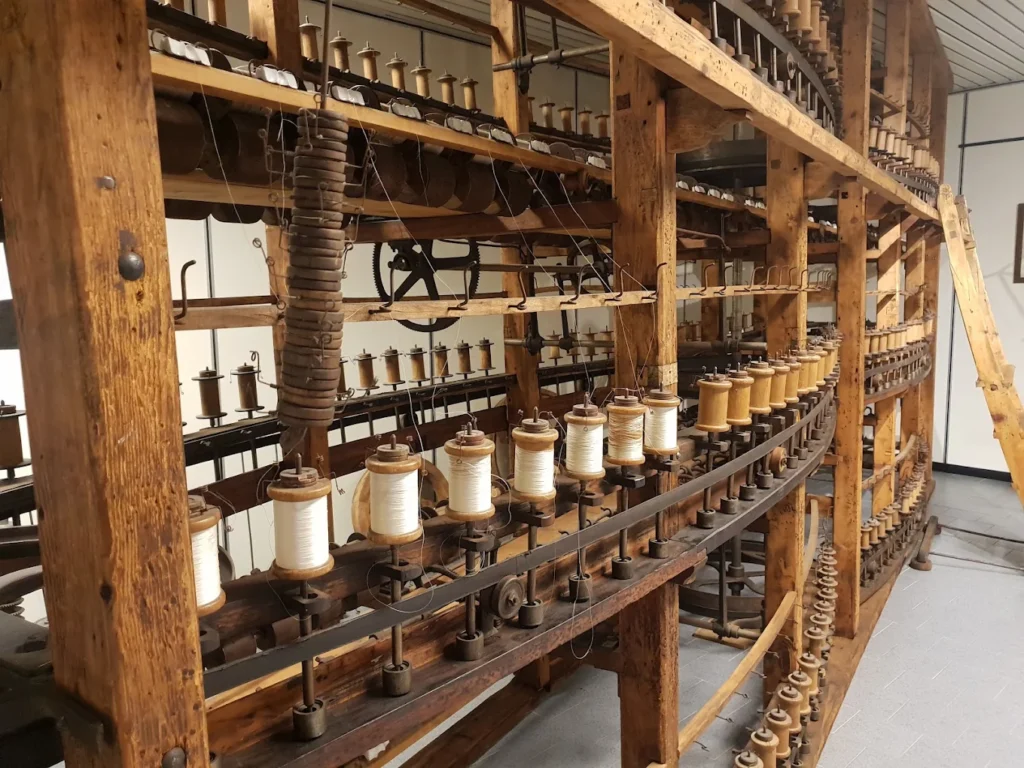
Como is known around the world for its lake, elegant villas and mountain scenery. But there is another story running through the city, one that is much easier to miss if you only look at the landscape: silk.
During our Romantic Italian Lakes tour, we visit the Como Silk Museum, where the history of one of the city’s most important industries becomes visible through the machines, tools, fabrics, documents and techniques that shaped generations of work.
What makes the museum particularly interesting is that it does not simply display beautiful finished fabrics. It explains the entire production process, from the silkworm and the raw fibre to coloured yarns, weaving, printing and fashion. The machinery and working tools help us understand just how much technical skill lies behind something that, in a shop window, can appear almost effortless.
Como’s relationship with silk is not simply a story about luxury. It is a story about workers, designers, printers, technicians, entrepreneurs and families whose livelihoods helped make the city synonymous with silk around the world.
That is why the museum belongs naturally in one of our tours.
Walking through a place is much more rewarding when you understand not only what made it beautiful, but what generations of people actually did there for a living.
Puglia — ancient olive trees and Antica Masseria Brancati
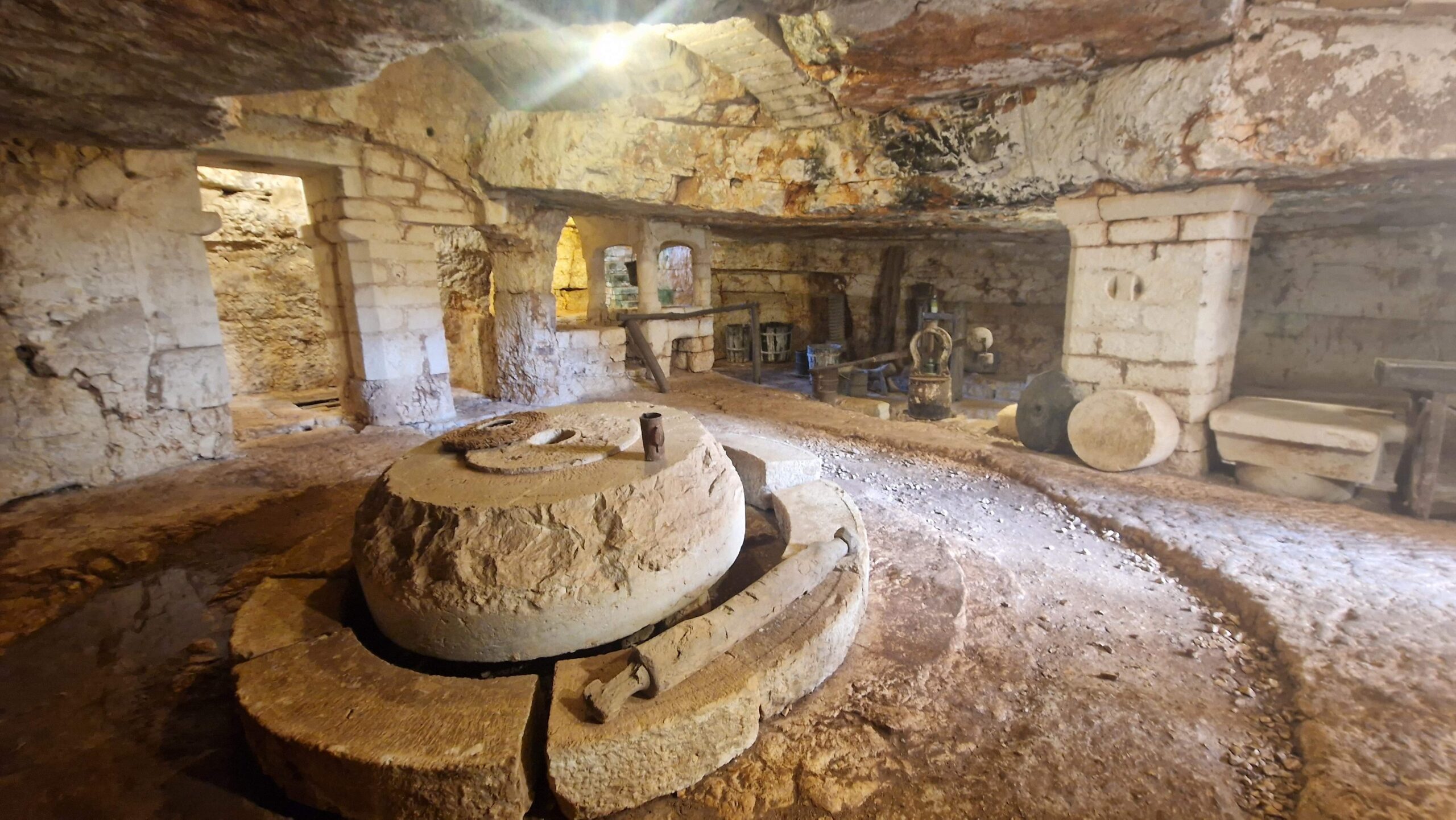
In Puglia, sometimes the landscape itself feels almost like another character.
Near Ostuni, during our Alberobello, Matera and Authentic Puglia tour, we walk among monumental olive trees whose trunks twist, divide and fold back on themselves in extraordinary shapes. Some of the olive trees in this area date back to Roman times, while the cultivation of the Ogliarola Salentina variety reaches even further into the region’s history.
Our visit takes us to Antica Masseria Brancati, in the heart of the plain of ancient olive trees near Ostuni. The Rodio family has continued producing extra virgin olive oil here for six generations, surrounded by more than a thousand monumental olive trees.
Then we go underground.
Beneath the masseria lies an extraordinary hypogean olive mill whose origins reach back to the Messapian period. Over centuries it continued to be used and modified, through Roman and medieval times and into a much more recent agricultural world. Walking into it is like entering the physical history of olive oil production.
You can still see spaces associated with pressing, collecting and storing oil, and understand just how different olive production once was. It gives context to something we normally encounter only at its final stage, poured from a bottle onto a plate.
But for me the real stars are outside.
Those monumental olive trees seem to carry the memory of Puglia in their trunks. Some have stood here for around two thousand years, through changes in farming, families, governments and generations of people who have cared for them.
Seeing the underground mill and then walking among those trees connects everything: history, agriculture, landscape and the olive oil we eventually taste.
It is difficult to imagine a better way of understanding why olive oil is not simply an ingredient in Puglia. It is part of the identity of the land itself.
Why these encounters matter
I am always a little cautious when travel companies talk about “making a difference”. Tourism alone does not save a tradition, a farm or a village, and travellers should not be made to feel that simply taking a holiday is an act of charity.
But the choices we make when designing a tour do matter.
We can take a group to a large restaurant that serves hundreds of people every day, or we can sometimes sit around Maura’s table. We can buy an anonymous tasting, or spend time with someone who actually makes the product. We can rush from one famous monument to another, or leave space in the itinerary for Paolo and Gabriele’s workshop in Chiavari, Florian and the Niederkofler family at Bergila, the silk-making history of Como or an ancient underground olive mill near Ostuni.
Our groups are small. The economic effect of any single visit is small too. But when these relationships continue year after year, they create regular business, visibility and another reason for local traditions to remain part of everyday life rather than becoming museum pieces.
For our guests, something else happens as well.
Italy stops being only a collection of beautiful places.
It acquires names and faces.
Maura. Virno. Raffaella. Ciccio. Francesco and Gabriele at Cantina della Luce. Paolo and Gabriele Levaggi. Florian, Franz, Brigitte, Andrea and Verena at Bergila. The people who have worked with silk in Como and the families who have cultivated Puglia’s olive trees for generations.
And very often, years after a journey is over, those are the stories our guests still talk about.