HALLOWEEN SPECIAL: SAVE € 100 EURO PER PERSON on your 2027 Italian adventure!

When a paper sheet is a piece of art. The paper mill in Amalfi

amalfi paper mill amalfi walking tour
Gianni Stanghellini, PhD in Geology
·Published 27 Apr 2021
Share

I am a technology enthusiast: always looking for web applications that can help me in my work and in my passions. I like to communicate quickly and effectively; I am interested in everything related to photography and video. I must admit it: I am a 51-year-old geek. 

There is a moment, however, when I feel like I want to go back to handwriting: a note for a friend, a letter, a travel diary. This happens at the Amalfi Paper Museum.

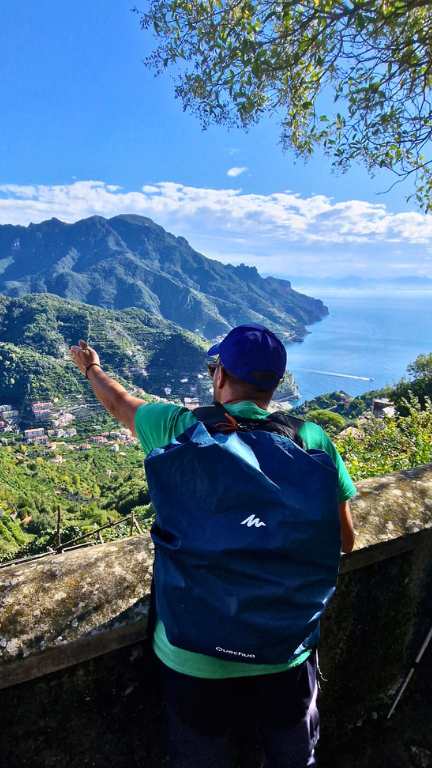
During the tour on the Amalfi Coast, we walk a path in the “Valley of the Mills” between walls and citrus groves: this path leads us to the outskirts of Amalfi, right where an ancient paper mill was transformed into a museum in 1969. The predominant element in the valley is a huge amount of water in a vigorous stream that allowed in past the movement of machinery to produce handmade paper. 

The Maritime Republics are among the first places where the use of paper was found: Venice, Pisa, Genoa, and finally Amalfi, the oldest. Paper mills were introduced in the 12th and 13th centuries. The Maritime Republics had commercial relations with the far East, and this certainly allowed them to learn how to make paper, just as it is possible that skilled labor arrived in Italy, bringing that technology. 

A commerce-based town like Amalfi felt the need of a large amount paper to sign contracts. One of the most famous buyers of the Amalfi paper was the Pope. As you can imagine the Pope had a great need of writing documents on a precious, high-quality paper. Nowadays the paper is still produced, but in a a much smaller amount. The modern uses of paper are mostly relegated to letter paper for invitations (weddings, baptism and so on). 

Amalfi paper is very precious. The sheet is called “bambagina” (“bambagia” is a waste cotton) due to the production process that starts from white linen, cotton, and hemp rags (and not from wood cellulose). In the Museum we can assist and collaborate in the making of a piece of paper, with the same processing techniques that were used in the Middle Ages. There is also an exhibition of photographs and document prints. The ancient noble families of the city even had their filigree coats of arms made on the sheets. Interested? Look at their website: https://bit.ly/3nnKvlL

I am sure that when we will visit it together, you too will want to buy a souvenir of this paper to write by hand … but, be careful! Once the text is written, it cannot be deleted, moved, copied, and pasted!  😉


The tour in this story

Amalfi Coast

Cliffside paths, seaside villages and volcanic landscapes on the Amalfi Coast, walked the local way at an easy pace. Small groups, local guides.

See the tour

Gianni StanghelliniPhD in Geology. Gianni Stanghellini is the founder of Walk About Italy and has been leading walking tours across Italy for over twenty years. A geologist by training, he reads the landscape differently — the shape of a valley, the colour of a cliff, the reason a village was built exactly where it was. Food, wine and the people who produce them are never far behind.

Share this story

To share on Facebook, tap its icon, then choose Facebook (or any other app) from the list that opens.

To share on Facebook, tap its icon, then choose Facebook (or any other app) from the list that opens.

View this tour

More stories

Discover Italian Alps & Dolomites delicious food Taste & Table
Alps & Dolomites

Discover Italian Alps & Dolomites delicious food

​Have you always thought that Northern Italian cuisine is dull and boring??? No NO NOOOO….you are wrong!Take a look here, these are just a sample of…

By Gianni Stanghellini
Laundry in the sun. A timeless habit. On the Trail

Laundry in the sun. A timeless habit.

Clothes hanging on the drying racks of the balconies. Clothes hanging on ropes pulled under the windows or on the terraces. Clothes hung even in the narrow…

By Gianni Stanghellini
Get our stories in your inbox

A selection of our stories and news from the walks, now and then. No spam.

HALLOWEEN SPECIAL

No tricks, just treats!

Save €100 per person on your 2027 Italian adventure!

Use code HALLOW26 – Ends October 31

Days
Hours
Minutes

Walk rating guide

Terrain: Mostly flat or gently rolling terrain, with well-maintained paths and only occasional short uneven sections.
Distance: Usually shorter walks, around 4.5 to 5.5 km / 3 to 4 miles per day, depending on the itinerary.
Elevation gain: Very limited. There may be a few gentle slopes, but no significant climbs or descents.
Who it is for: Ideal for beginners, casual walkers, families, and anyone looking for a relaxed walking holiday with little physical effort.

Terrain: A mix of flat sections and more uneven ground, with some inclines, steps, or minor obstacles that remain manageable for most reasonably active travellers.
Distance: Generally around 5 to 8 km / 3 to 5 miles per day, depending on the tour and terrain.
Elevation gain: Noticeable but not demanding. Some uphill and downhill stretches may be present, though never steep or prolonged.
Who it is for: Suitable for beginners who want a slightly more active experience, as well as for regular walkers looking for a relaxed but rewarding pace.

Terrain: Varied terrain that may include uneven paths, longer walking sections, and regular uphill or downhill stretches.
Distance: Moderate daily walking time and distance, suitable for travellers who enjoy being active outdoors for a good part of the day.
Elevation gain: More consistent and clearly noticeable, though still within the reach of anyone with a basic to good level of fitness.
Who it is for: Best for active travellers who are comfortable walking for several hours a day and can handle some uneven terrain and sustained inclines.